
If you have asked a cash buyer for an offer, you have probably wondered where the number came from. We would rather show you the math, so you can compare it with what an agent tells you. This post walks through the four parts of every cash offer we make, a worked example with round hypothetical numbers, and the cases where listing your house is the better choice.
The honest version up front. Our cash offer will usually be less than what you might get listing with an agent after repairs. That's the trade for speed, certainty, no repairs and no fees. Use our calculator to compare, and feel free to get an agent's opinion too.
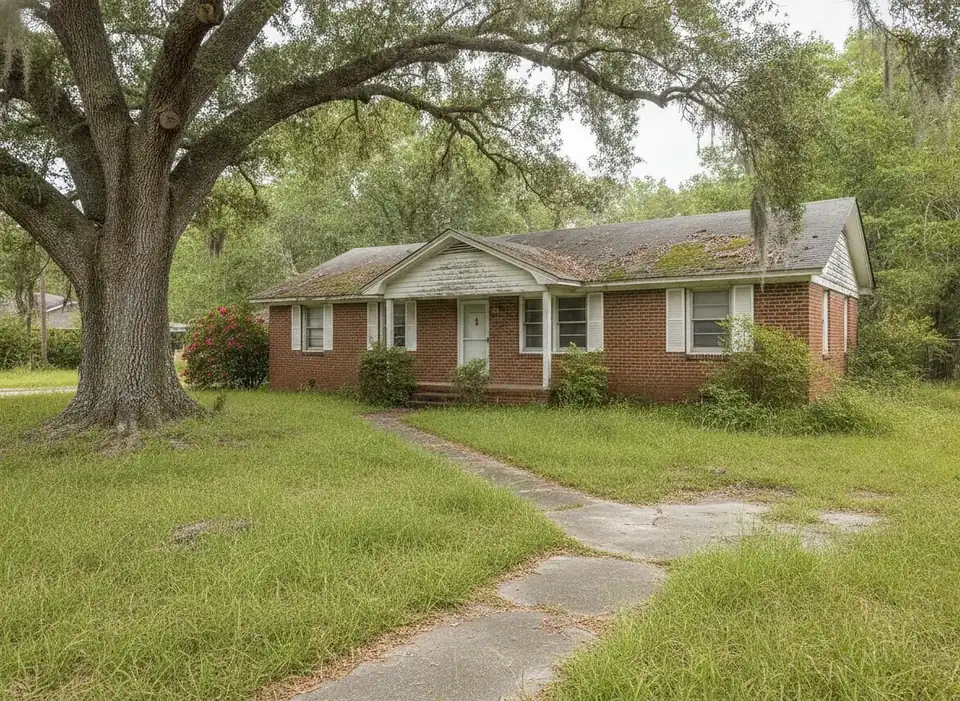
The four parts of a cash offer
Every offer we write starts from one formula:
Cash offer ≈ after-repair value − repairs − buying, holding and resale costs − resale margin
1. As-is value and after-repair value
We start with comparable sales: recent sales of similar homes nearby, matched as closely as we can on size, age, lot, flood exposure and condition. From those we estimate two numbers. The first is what the house would likely sell for today, as it is. The second is the after-repair value: what it would likely sell for once the work is done.
2. The repair estimate
Next we price the work: roof, heating and air, electrical, plumbing, foundation, water damage, floors, kitchen, baths, paint and the cleanout. Age matters here. In West Ashley's ZIP 29407 the median home was built in 1971, and 67.5% of homes there were built before 1980; in the Town of James Island the median year is 1970 (U.S. Census Bureau, American Community Survey 2024 5-year). Older systems near the end of their life show up in the estimate.
3. Buying, holding and resale costs
- Buying costs. We pay the closing costs when we buy from you, including South Carolina's deed recording fee of $1.85 per $500 of price, which is normally the seller's cost.
- Holding costs. Property taxes, insurance, utilities and the cost of tying up our cash for the months the work takes. A house we own isn't our legal residence, so it is assessed at 6% rather than the owner-occupied 4%, and the sale resets the assessed value to market.
- Resale costs. When the finished house sells, there are selling costs again: commissions or marketing, closing costs and often buyer concessions.
4. The resale margin
Finally, there is a margin. Repairs run over budget, markets shift and finished houses sometimes sit. The margin is what makes it worth buying a house as-is with cash and carrying those risks instead of you. Every cash buyer has one; we just say so.
A worked example (hypothetical numbers)
Hypothetical example. Every figure below is invented and rounded for clarity. It is not an offer, an appraisal or a prediction for any real house.
Picture a three-bedroom brick ranch that would sell for about $400,000 once it is fixed up. It needs a roof, a new heating and air system, a kitchen, floors and paint.
| Cash offer math (hypothetical) | Amount |
|---|---|
| After-repair value | $400,000 |
| Repairs (roof, HVAC, kitchen, floors, paint) | −$50,000 |
| Resale costs when the finished house sells | −$28,000 |
| Holding costs for about five months | −$12,000 |
| Closing costs we pay when we buy from you | −$5,000 |
| Resale margin | −$40,000 |
| Hypothetical cash offer | $265,000 |
Now the same house if the owner does the repairs and lists it with an agent, with the same commission, concessions, attorney fee and holding cost defaults as our cash offer vs. listing calculator:
| Fix and list (hypothetical) | Amount |
|---|---|
| Sale price after repairs | $400,000 |
| Repairs paid by the owner | −$50,000 |
| Agent commission at 5.5% (negotiable; varies) | −$22,000 |
| Seller concessions at 1% | −$4,000 |
| Seller attorney fee (varies; ask your attorney) | −$750 |
| Deed recording fee (800 × $1.85) | −$1,480 |
| Holding costs, 3 months at $1,500 | −$4,500 |
| Estimated net before mortgage payoff | $317,270 |
In this example, fixing and listing nets about $52,000 more than the cash offer. That is a real difference, and you should weigh it. The gap moves with the facts: it widens when a house needs little work, and it narrows when repairs run over, the owner can't fund them, or the house sits. The listing column also assumes a $400,000 sale. Across the Charleston Trident region, single-family homes sold for 95.6% of their original list price in September 2026 (Charleston Trident Association of Realtors MLS data, September 2026). Your mortgage, liens and any past-due taxes are paid off from the proceeds either way.
Why cash offers come in below retail
- The buyer takes on the repairs and the risk that they cost more than planned.
- The buyer pays transaction costs twice: once to buy and once to resell.
- You get speed and certainty: no showings, no buyer financing to fall through, and a closing in as little as 7–14 days when the title is clear, on the date you pick.
- You skip the commission, the repairs, the closing costs (we pay them) and the months of carrying costs.
You are trading some price for time, certainty and less work.
When listing is the better choice
Listing with an agent will very likely net you more when:
- The house is in good shape or needs only light cosmetic work.
- You have time. Single-family homes took a median of 55 days to go under contract region-wide, 44 days in West Ashley and 38 on James Island in September 2026 (CTAR MLS data), and closing often takes another month.
- You can pay for repairs and carry the mortgage, taxes and insurance while it sells.
- There is no deadline, such as a tax sale, an estate that needs to close or a move date.
If that is you, get an agent's opinion. A cash sale tends to make more sense for a house that needs major repairs, an inherited house going through probate, a home behind on property taxes, or any time a firm date matters more than the last dollar.
How to check any cash offer, including ours
- Ask how the number was built: value, repairs and costs.
- Ask who is actually buying. South Carolina's 2024 law (H.4754) defines wholesaling as marketing a house you only have under contract. We're the buyer. We don't put your house under contract and shop it to someone else.
- Confirm an attorney closing. In South Carolina a licensed attorney must handle or supervise the title search, closing and recording (State v. Buyers Service, 1987). You may hire your own attorney too.
- Ask what "no fees" means. With us there is no commission or fee, and we pay the closing costs. You still pay off your own mortgage, liens, past-due taxes and HOA balances from the sale proceeds, and property taxes are prorated at closing.
- Ask whether the number can change after a walkthrough, and why.
This is general information, not legal or tax advice. Ask your own attorney or CPA about your situation.
How we make our offer
Send us the address and a few details through our cash offer form, or call Call (727) 300-6656. We look at comparable sales, see the house, and give you a written cash offer within 24–48 hours of seeing the house or getting the details we need. We buy as-is: no repairs, no cleaning, and leave what you don't want. We buy houses across the Charleston area, from West Ashley to Mount Pleasant and James Island. The full process is on our how it works page.
Frequently asked questions
How much less do cash home buyers pay than market value?
There is no fixed percentage. It depends on the repairs, the buyer's costs to hold and resell, and the risk involved. In our hypothetical $400,000 example, the cash offer was about $52,000 below what the owner might net after fixing and listing. A house needing little work usually shows a wider gap, so compare both numbers before you decide.
Do cash home buyers pay closing costs?
Many do, but ask exactly what that covers. We pay the closing costs, including the South Carolina deed recording fee that is normally the seller's cost, and charge no fees or commissions. You still pay off your mortgage, liens, past-due taxes and HOA balances from the proceeds, and property taxes are prorated at closing.